 Ember
Ember
Clinic connection
Patients pick your clinic by name, and it stays in their Profile.
For clinicians
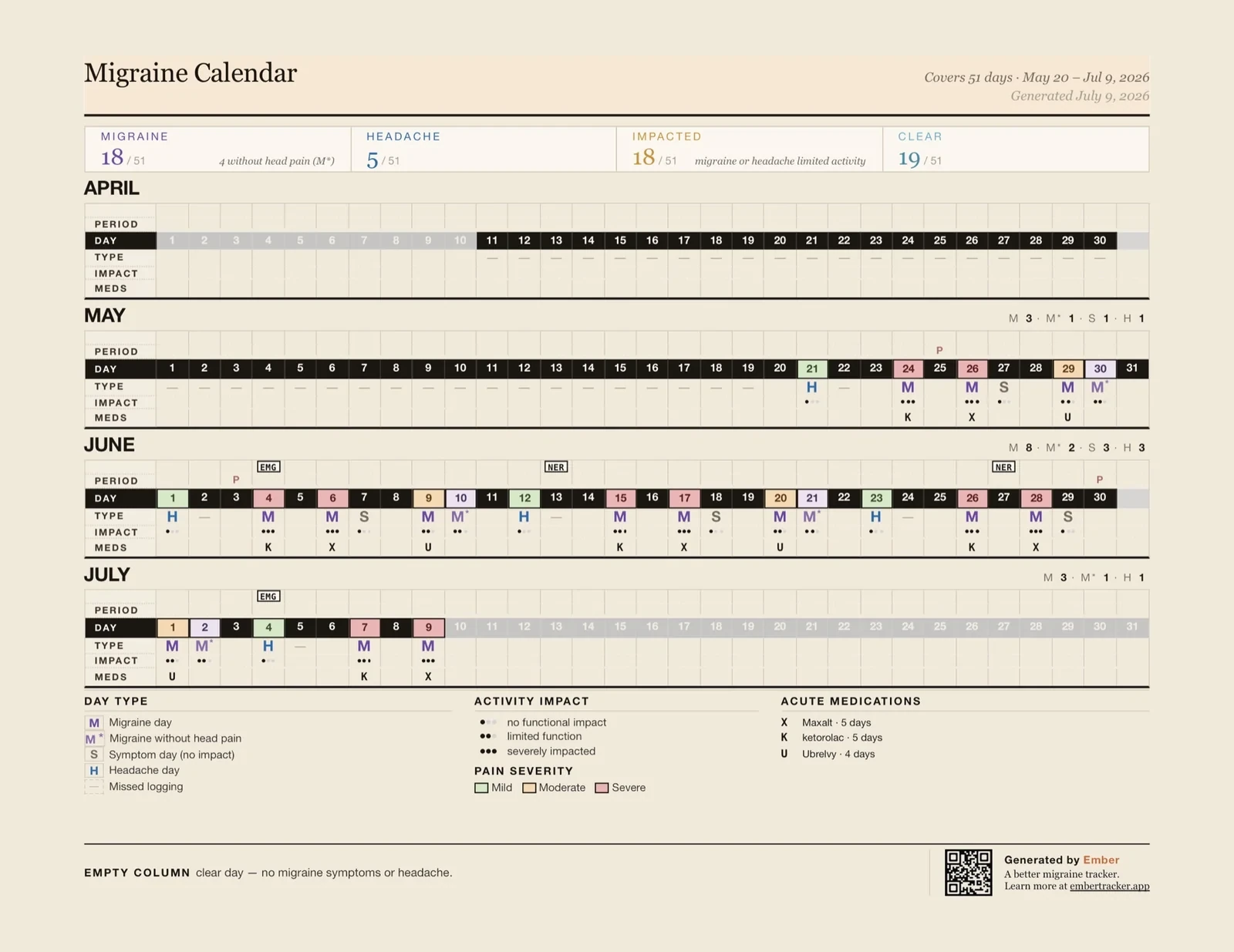
Ember is a free migraine tracker made by a practicing headache specialist. Patients send or bring this calendar and a chart note you can read in about a minute.
One column per date and one row per month, with the period’s totals at the top.
Each monthly rate is shown with its baseline and the change in percent.
HEADACHE LOG SUMMARY
Apr 9 to Jul 7, 2026 (90 days)
DATA THIS 90 DAY PERIOD
TREATMENT RESPONSE
Botox (started Feb 2026)
The full note adds current preventives, acute medication use, Botox interval, menstrual timing and response beyond frequency.
Each start date is marked on the chart, including add-on treatments.
Patients get the same warnings in the app.
ACUTE MEDICATION USE
HEMIPLEGIC VARIANT
Patient reports 3 attacks with one-sided weakness in the past 90 days. Dates: Apr 20, May 10, Jun 10.
Migraine-specific medications logged during these attacks: Maxalt.
Classification
Every classification follows fixed rules built on ICHD-3 criteria. No AI guesses, no black box.
Clinical referencesTap a scenario to see Ember in action
Impact days
Patients rate each day’s impact. Limited and severe days count as impacted.
Clinic setup
Without setup, patients can still email the report to any provider.
Patients pick your clinic by name, and it stays in their Profile.
Set up a patient’s medications and limits in your browser for them to import.
Workflow
Only the people the patient sends it to. A report emailed or shared from the patient’s phone doesn’t pass through Ember’s servers, so Ember’s team never receives it.
No. The report is a PDF your staff can attach to the chart. Patients can also copy the chart note as plain text and send it through your patient portal.
No. Logging and the report are free. Ember Plus is for patients who want to understand their migraines in more depth.
The note says so in its coverage line, which separates logged days from presumed-clear and unknown ones. Unlogged days count as clear only if the patient chose that setting, and the calendar marks missed days with a dash.
Yes. Set each acute class’s monthly limit in Provider Handoff. After the patient imports the plan, Ember’s overuse warnings use your limits.
Privacy
We don’t sell health data or use it for ads.
It’s free on iPhone and Android. Send them to embertracker.app.
Scan to get Ember on your phone.